

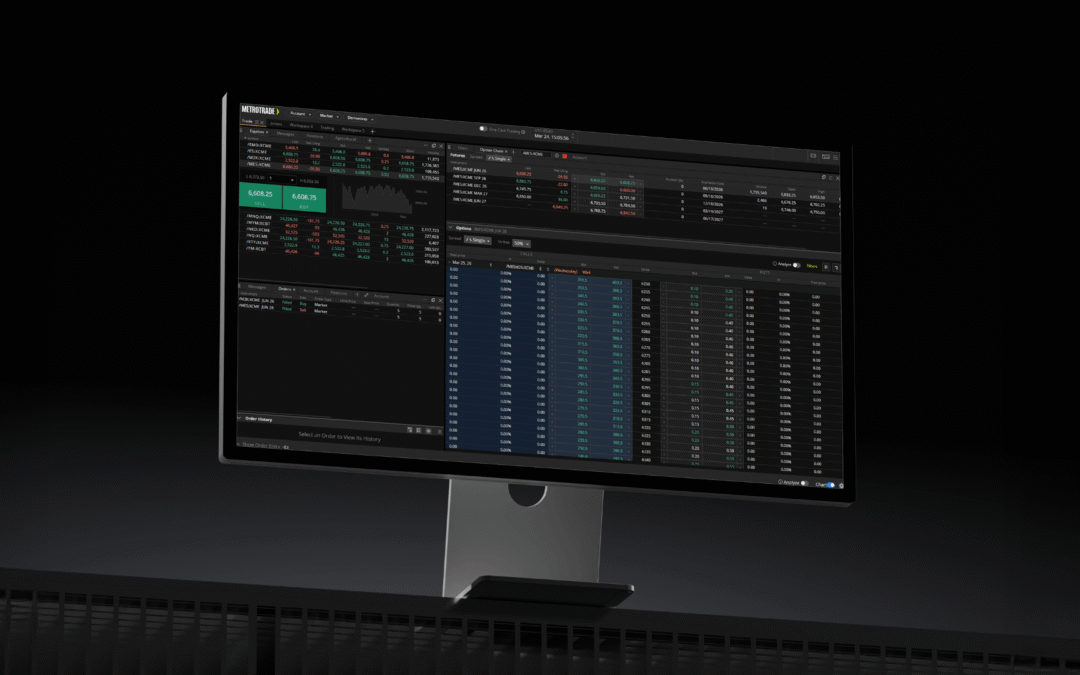
MetroTrade has officially launched options on futures trading on the MetroTrader platform. Traders can now access both futures and futures options in a single account, using the same interface and tools.
This launch expands what traders can do on MetroTrader. It adds more ways to manage risk, structure trades, and respond to changing market conditions across major futures markets.
For traders already familiar with futures or equity options, this opens the door to more advanced strategies in one place.
What Are Futures Options?
Futures options are contracts that give you the right, but not the obligation, to buy or sell a futures contract at a specific price before expiration.
They work similarly to stock options, but instead of being based on shares of a company, they are based on futures contracts such as the E-mini S&P 500 (ES), Nasdaq-100 (NQ), or Gold (GC).
If a futures option is exercised, it results in a position in the underlying futures contract rather than shares.
This structure is important because futures contracts come with standardized sizing, built-in leverage, and extended trading hours. These factors directly impact how options are priced and traded.
If you want a full breakdown, see our guide:
What are Options on Futures? Trading Futures Options Explained
Why Some Traders Prefer Futures Options
Many traders who come from equity options find futures options to be more efficient in certain situations.
Some of the common reasons include:
Capital Efficiency
Futures options are tied to futures contracts, which use margin instead of full notional value. This can allow traders to control exposure with less capital.
Broader Market Access
Futures options provide direct access to global markets including equity indices, energy, metals, and currencies.
Nearly 24-Hour Trading
Futures markets trade almost around the clock, which allows traders to react to overnight news and global events.
A More Advanced Trading Product
Futures options are generally considered an advanced product. While they can offer defined risk in many strategies, they also introduce additional variables that traders must understand.
These include:
- Time decay, which reduces option value as expiration approaches
- Implied volatility, which affects pricing and can shift quickly
- Strike price selection and expiration timing
- Contract-specific details tied to the underlying futures market
Because of this added complexity, traders must be approved for options trading before they can trade futures options on MetroTrader.
Approval helps ensure that traders understand how these instruments work and the risks involved.
Familiar for Options Traders
If you already trade equity options, futures options will feel familiar right away.
The core structure is the same. You are still trading calls and puts, working with strike prices and expiration dates, and analyzing option chains to evaluate pricing and positioning. The same concepts apply, including intrinsic value, time value, and how volatility impacts option premiums.
The main difference is the underlying asset. Instead of a stock or ETF, a futures option is tied to a futures contract. If the option is exercised, it results in a futures position rather than shares. This changes how trades are managed, especially since futures contracts come with their own margin requirements, tick values, and trading hours.
For many traders, this shift is not a drawback. In fact, those who are already comfortable with equity options often find futures options to be a natural extension of what they already know. The learning curve tends to focus more on understanding the futures contract itself rather than relearning how options work.
If you want a deeper comparison between the two, see:
Futures Options vs Stock Options: Key Differences Explained
Trade Futures and Futures Options in One Platform
With MetroTrader, futures and futures options are fully integrated into a single platform.
You can:
- Monitor both futures and options positions in one account
- Manage risk across positions in real time
- Use the same platform layout and tools
- Avoid switching between multiple platforms or brokers
This is especially useful for traders running more advanced strategies that involve both futures and options.
Getting Started on MetroTrader
If you already have a MetroTrade account, you can request approval to trade futures options by emailing MetroTrade support.
If you are new:
- Open and complete your live trading application
- Fund your account through the client portal
- Request futures options trading approval
- Access futures options markets on MetroTrader
Approval is required because futures options involve additional complexity and risk compared to standard futures trading.
Continue Learning
Futures options come with a learning curve, but the right education can make a big difference.
To build a strong foundation, explore these guides:
- What are Options on Futures? Trading Futures Options Explained
- Futures Options vs Stock Options: Key Differences Explained
- How to Read an Option Chain for Futures Options Trading
These resources cover the core concepts, comparisons, and tools you need to get started.
Start Exploring Futures Options
The addition of futures options expands what traders can do on MetroTrader.
For experienced traders, it provides more flexibility in how trades are structured and risk is managed. For those with equity options experience, it offers a familiar framework applied to a broader set of markets.
If you are ready to take the next step, you can open an account, request approval, and begin exploring futures options directly on MetroTrader.
The content provided is for informational and educational purposes only and should not be considered trading, investment, tax, or legal advice. Futures trading involves substantial risk and is not suitable for every investor. Past performance is not indicative of future results. Margins are subject to change at any time. You should carefully consider whether trading is appropriate for your financial situation. Always consult with a licensed financial professional before making any trading decisions. MetroTrade is not liable for any losses or damages arising from the use of this content.
Transactions in options carry a high degree of risk. Purchasers and sellers of options should familiarize themselves with the type of option (i.e. put or call) which they contemplate trading and the associated risks. You should calculate the extent to which the value of the options must increase for your position to become profitable, taking into account the premium and all transaction costs. The purchaser of options may offset or exercise the options or allow the options to expire. The exercise of an option results either in a cash settlement or in the purchaser acquiring or delivering the underlying interest. If the option is on a future, the purchaser will acquire a futures position with associated liabilities for margin (see the section on Futures above). If the purchased options expire worthless, you will suffer a total loss of your investment, which will consist of the option premium plus transaction costs. If you are contemplating purchasing deep out-of-the-money options, you should be aware that the chance of such options becoming profitable ordinarily is remote. Selling (‘writing’ or ‘granting’) an option generally entails considerably greater risk than purchasing options.
Although the premium received by the seller is fixed, the seller may sustain a loss well in excess of that amount. The seller will be liable for an additional margin to maintain the position if the market moves unfavorably. The seller will also be exposed to the risk of the purchaser exercising the option, and the seller will be obligated to either settle the option in cash or to acquire or deliver the underlying interest. If the option is on a future, the seller will acquire a position in a future with associated liabilities for margin (see the section on Futures above). If the position is ‘covered’ by the seller holding a corresponding position in the underlying interest or a future or another option, the risk may be reduced. If the option is not covered, the risk of loss can be unlimited. Certain exchanges in some jurisdictions permit deferred payment of the option premium, exposing the purchaser to liability for margin payments not exceeding the amount of the premium. The purchaser is still subject to the risk of losing the premium and transaction costs. When the option is exercised or expires, the purchaser is responsible for any unpaid premiums outstanding at that time.