

Trade Treasury Futures
Trade 2-Year, 5-Year, 10-Year, and 30-Year Treasury futures with transparent commissions and competitive intraday margins.

What are Treasury Futures?
Treasury futures are standardized contracts that let you trade the price of U.S. government debt, such as Treasury notes and bonds, without buying the underlying security directly.
Traders use Treasury futures to take a position on the direction of interest rates or to hedge interest rate risk elsewhere in their portfolio.
These contracts trade nearly 24 hours a day on CME Globex and are closely watched around Federal Reserve policy decisions and major economic data releases.
Why Trade Treasury Futures?
Trade the world’s most influential rate market
The 10-Year Note is one of the most widely followed benchmarks in global finance, influencing everything from mortgage rates to corporate borrowing costs.
Go long or short based on your view
You can take a long or short position based on your view of interest rate direction.
React to Fed policy and economic data in real time
Treasury futures respond directly to Federal Reserve rate decisions, inflation data, and employment reports, with nearly 24-hour trading to act on those moves.
Futures trading involves substantial risk and is not suitable for all investors. Leverage can work against you as well as for you.

Trade Popular Treasury Futures
ZN
10-Year T-Note Futures
Tracks the price of the 10-Year U.S. Treasury Note, the most widely followed interest rate benchmark in the world.
ZB
30-Year T-Bond Futures
Tracks the price of the 30-Yr U.S. Treasury Bond, watched for its sensitivity to long-term inflation expectations.
ZF
5-Year T-Note Futures
Tracks the price of the 5-Year U.S. Treasury Note, often used by traders focused on the belly of the yield curve.
ZT
2-Year T-Note Futures
Tracks the price of the 2-Year U.S. Treasury Note, often watched for near-term Fed policy expectations.
View all available contracts
| Code | Product Name | Contract Size | Min. Tick Size | Trading Hours (EST) |
|---|---|---|---|---|
| /ZB | 30-Year Treasury Bond Futures | $100,000 | 1/32 = $31.25 | Sun 6 PM – Fri 5 PM |
| /ZN | 10-Year Treasury Note Futures | $100,000 | 1/2 of 1/32 = $15.625 | Sun 6 PM – Fri 5 PM |
| /ZF | 5-Year Treasury Note Futures | $100,000 | 1/4 of 1/32 = $7.8125 | Sun 6 PM – Fri 5 PM |
| /ZT | 2-Year Treasury Note Futures | $200,000 | 1/8 of 1/32 = $7.8125 | Sun 6 PM – Fri 5 PM |
| /UB | Ultra U.S. Treasury Bond Futures | $100,000 | 1/32 = $31.25 | Sun 6 PM – Fri 5 PM |
| /MWN | Micro Ultra U.S. Treasury Bond Futures | $10,000 | 1/32 = $3.125 | Sun 6 PM – Fri 5 PM |
| /TN | Ultra 10-Year Treasury Note Futures | $100,000 | 1/2 of 1/32 = $15.625 | Sun 6 PM – Fri 5 PM |
| /MTN | Micro Ultra 10-Year Treasury Note Futures | $10,000 | 1/2 of 1/32 = $1.5625 | Sun 6 PM – Fri 5 PM |
| /SR3 | Three-Month SOFR Futures | $25 per basis point | 0.0025 = $6.25 | Sun 6 PM – Fri 5 PM |
| /2YY | 2-Year Yield Futures | $10 per basis point | 0.0010% = $1.00 | Sun 6 PM – Fri 5 PM |
| /10Y | 10-Year Yield Futures | $10 per basis point | 0.0010% = $1.00 | Sun 6 PM – Fri 5 PM |
Start Trading Treasury Futures
Trade Micro Treasury Futures with Lower Costs
At 1/10th the size of their Ultra Treasury futures counterparts, Micro Treasury futures give you access to the same 10-Year and 30-Year interest rate exposure with a smaller margin requirement and tick value.
- Same benchmark exposure as the Ultra 10-Year and Ultra T-Bond futures, at 1/10th the notional size
- Cash-settled, with no physical delivery obligation at expiration
- A more accessible way to build exposure to key points on the yield curve
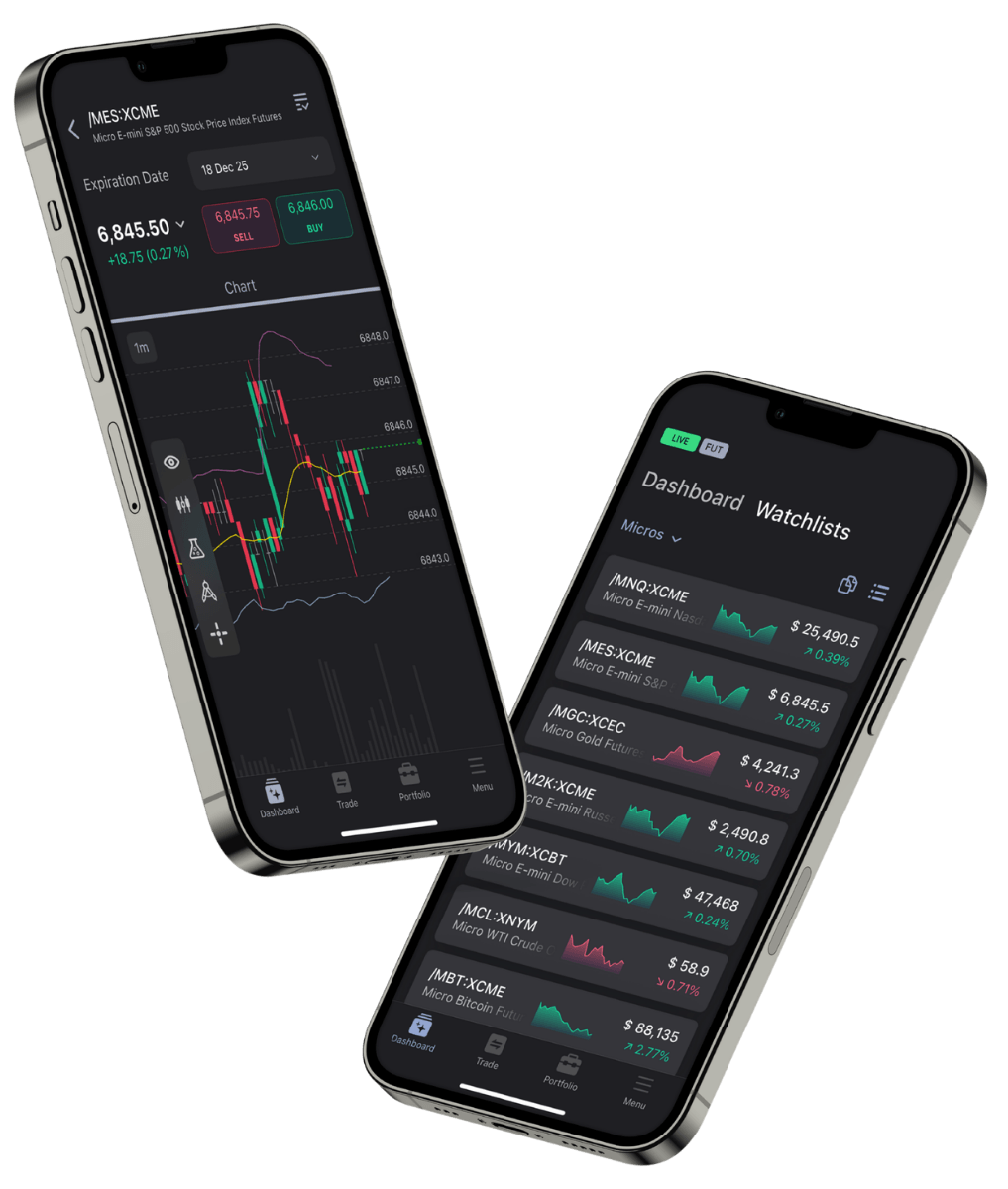
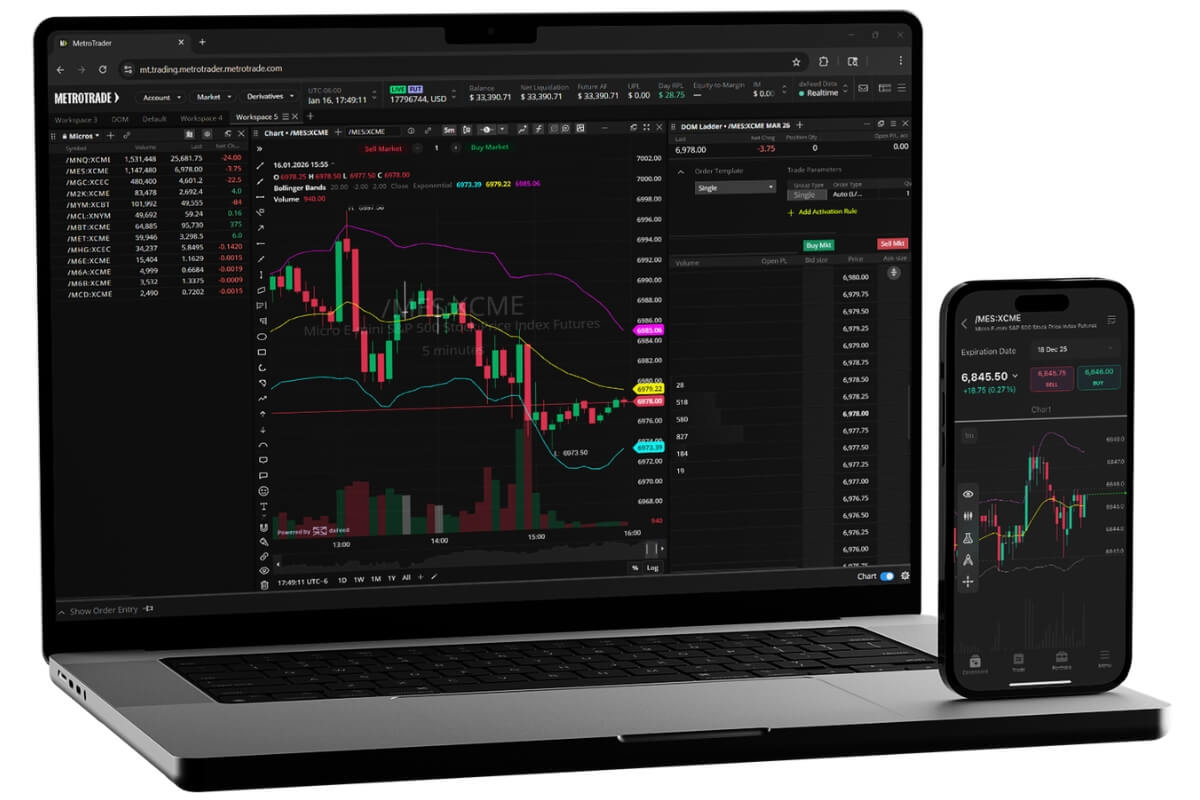
Start Trading Futures with a Low-Cost Broker
Open a MetroTrade account and access futures markets with low commissions, competitive margins, and a platform built for active traders.
Frequently Asked Questions
What are Treasury futures?
Treasury futures are standardized contracts that let traders take positions on the price of U.S. government debt, such as Treasury notes and bonds, without owning the underlying security. They are widely used to speculate on or hedge against changes in interest rates.
How are Treasury futures different from trading bonds directly?
Trading a bond directly means buying and holding the actual debt security. Treasury futures are exchange-traded contracts tied to the price of that security. They are leveraged, trade nearly 24 hours a day, and don’t require the capital needed to buy a bond outright.
What drives the price of Treasury futures?
Treasury futures respond to Federal Reserve interest rate decisions, inflation data such as CPI, employment reports like non-farm payrolls, and broader economic growth expectations. Since Treasury prices move opposite to interest rates, any data that shifts rate expectations tends to move these contracts.
When do Treasury futures trade?
Most CME Treasury futures trade Sunday through Friday, from 6:00 PM ET to 5:00 PM ET the following day, with a one-hour daily break. Trading volume is typically highest during the U.S. session, especially around major economic data releases and FOMC announcements.
What is the difference between the 10-Year Note and 30-Year Bond futures?
Both track U.S. government debt, but at different maturities. The 10-Year Note (ZN) is the most widely followed benchmark and tends to move on a broad set of economic data. The 30-Year Bond (ZB) is more sensitive to long-term inflation expectations and tends to see larger price swings per tick due to its longer duration.
What are Treasury Yield futures?
Yield futures are a more direct way to trade Treasury interest rates. Unlike standard Treasury futures, which are quoted in bond price terms, Yield futures are quoted directly in yield and are cash-settled, with each contract worth $10 per basis point of yield movement.
Do Treasury futures involve physical delivery?
Standard Treasury note and bond futures do have a delivery mechanism at expiration, where the seller delivers an eligible Treasury security from a defined basket. Most retail traders close or roll positions before expiration to avoid delivery. Yield futures, by contrast, are cash-settled and do not involve delivery.
How much margin is required to trade Treasury futures?
Intraday margin requirements for Treasury contracts vary by contract and are updated periodically. View current requirements on our margins page.