

Markets don’t always move in straight lines. Sometimes, they give off a strong signal in one direction, only to snap back quickly in the other. This kind of price action is called a whipsaw, and it can catch both beginner and experienced traders off guard.
Whipsaw trading is one of the most frustrating situations futures traders face. A breakout you trust fails. A trend you follow reverses hard. Stops get hit, only for price to move in your favor after you’re out. The result? Losses, stress, and second-guessing your strategy.
Understanding what whipsaw trading is, why it happens, and how to handle it can help you avoid some costly mistakes. In this guide, we’ll break down real examples, warning signs, and risk management tactics for whipsaws in futures trading.
Key Takeaways
- A whipsaw is a sharp price move in one direction followed by a fast reversal, often trapping traders on both sides.
- Whipsaws tend to happen during periods of high volatility, low liquidity, or around false breakouts and fake signals.
- Futures traders can reduce whipsaw risk by using proper stop placement, trading smaller size, and avoiding impulsive trades.
- Recognizing potential whipsaw setups helps you stay out of bad trades and manage emotional pressure more effectively.
What Is Whipsaw Trading?
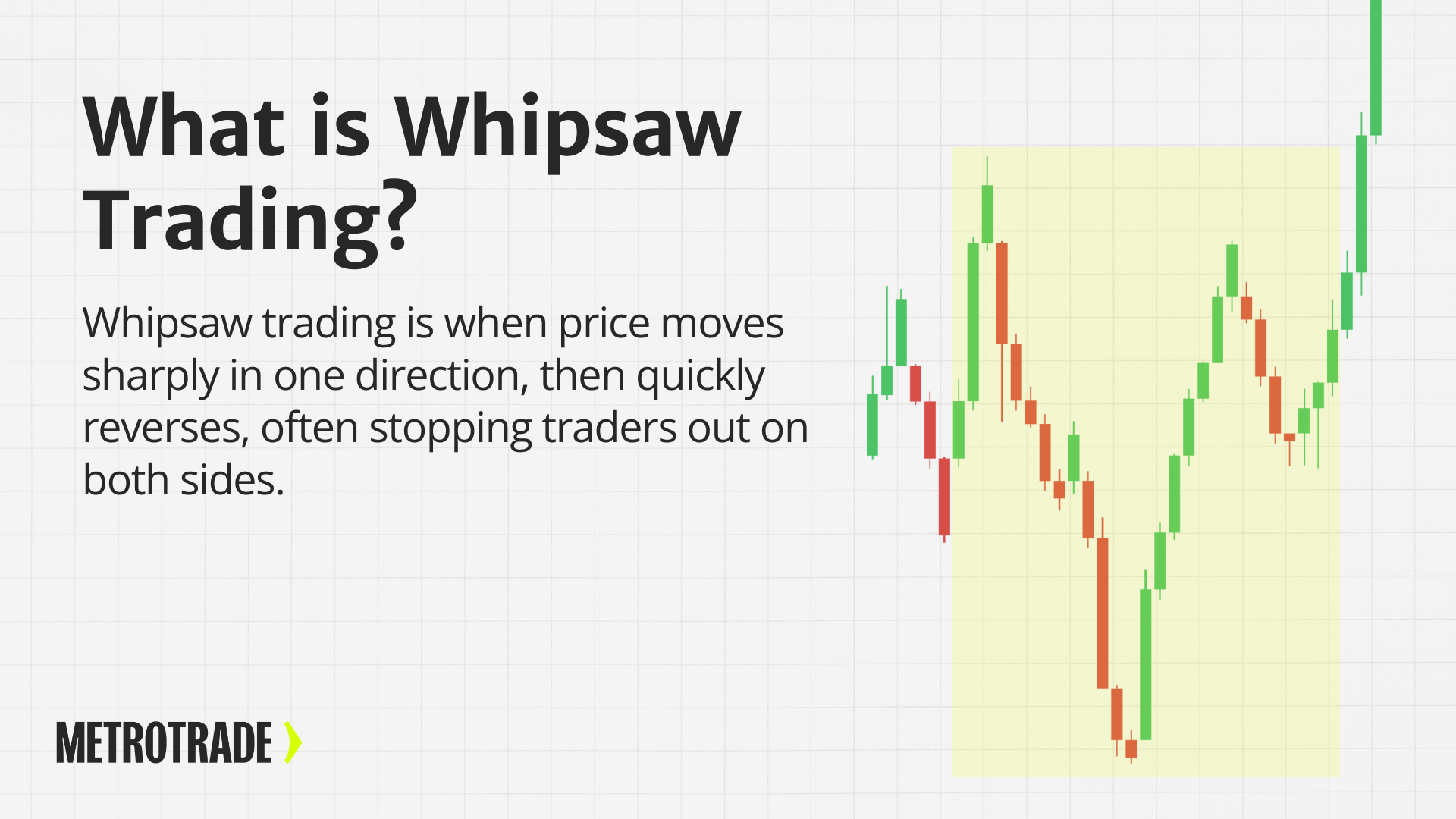
Whipsaw trading happens when the market makes a sudden move in one direction but then quickly reverses course. This kind of price action often hits stop-loss orders, fakes traders out, and causes losses for both buyers and sellers.
The term “whipsaw” comes from the motion of a saw moving back and forth. It’s a perfect name for the market’s back-and-forth behavior during these moves. One minute, the price breaks out. The next, it’s moving sharply in the opposite direction.
Whipsaws are not a strategy or a setup. They’re a market behavior that reflects indecision, volatility, or manipulation. In futures markets, this behavior can be especially painful because of leverage and the fast pace of intraday moves.
How Whipsaw Moves Happen
Whipsaws usually happen when the price pushes through a key level, like support or resistance, and then snaps back quickly. This kind of move often triggers stop-losses and draws in traders who chase breakouts. Once enough orders are filled, the market reverses sharply.
This can happen in a few ways:
- During major news events: Big releases like CPI, FOMC, or NFP can cause fast moves followed by reversals.
- In low-volume markets: If liquidity is thin, even small order flows can create sharp price changes.
- From algorithmic behavior: Algos may hunt stops around technical levels, then fade the move.
- In overnight sessions: When fewer traders are active, prices can whipsaw without much warning.
The result is the same: traders get in, get stopped out, and watch the market move without them—or worse, lose money both ways.
Whipsaw Trading Example in Futures
Let’s walk through an example using Micro E-mini S&P 500 futures (MES).
Imagine the MES is trading at 6550 and has been consolidating below a resistance level for hours. At 7:30 a.m. CT, the Consumer Price Index (CPI) numbers are released. The market jumps from 6550 to 6565 in seconds, breaking the resistance and drawing in breakout buyers.
But the rally stalls. Within five minutes, MES drops sharply back to 6540. The breakout fails. Stop losses from long trades are triggered. Shorts pile in.
Then, price finds support and grinds back up to 6560 by market open. Traders on both sides were whipsawed. Losses happen fast. Confidence takes a hit.
This pattern happens often in index futures, where economic news, low liquidity, or algo behavior can create sudden, false moves.
Whipsaw vs Normal Reversal
Not every sharp reversal is a whipsaw. Here’s how to tell the difference:
- Speed of the move: Whipsaws happen quickly and often without warning. Reversals tend to develop more slowly and give traders time to react.
- Volume patterns: Whipsaws often occur on lower or uneven volume. True reversals usually show rising volume as momentum builds.
- Technical confirmation: Whipsaws lack confirmation and often break out briefly before reversing. Reversals show clearer patterns like double tops or trendline breaks.
- Trader outcome: Whipsaws usually trap both bulls and bears. Reversals tend to reward those who recognize the trend shift early.
- Emotional response: Whipsaws create confusion and frustration. Reversals provide clarity once confirmed by structure and indicators.
Understanding these differences can help you stay out of low-probability trades and avoid getting caught on the wrong side of a false move.
When Whipsaws Are Most Likely to Occur
Whipsaws can show up anytime, but they tend to cluster in certain market conditions. Knowing when they’re more likely can help you adjust your risk.
Here are common whipsaw environments:
- High-impact news releases: CPI, jobs reports, and Fed statements often create fake moves before the real direction sets in.
- Near major technical levels: Support, resistance, trendlines, and round numbers attract both retail and algo activity.
- Thin liquidity: Overnight sessions, pre-market, or holiday trading can exaggerate small moves.
- During market opens and closes: Fast order flow can push prices beyond normal ranges before settling.
Futures traders who operate during these times should stay alert for false breakouts, choppy moves, and erratic price behavior.
Why Whipsaws Matter in Futures Trading
Whipsaws are more than just annoying. They can seriously damage your account if you’re not prepared. Here’s why they matter:
- Leverage increases losses: A small move against your position gets amplified when you’re using margin.
- Tight stops get hunted: If your stop is too close, it can be triggered by a minor fakeout.
- Psychology suffers: Whipsaws lead to frustration, emotional trading, and second-guessing your system.
- Margin calls become likely: Multiple small losses can add up, especially in volatile markets.
Futures trading requires fast decision-making. Whipsaws make that even harder. If you don’t have a clear plan, it’s easy to overtrade or take on too much risk.
How to Identify Potential Whipsaw Setups
You can’t predict every whipsaw, but there are signs that suggest one may be coming. Here’s what to watch for:
- Breakouts on low volume: Weak follow-through after a breakout can be a red flag.
- Quick rejection candles: Long wicks and reversal candles near key levels show failed attempts to break out.
- Lack of consolidation: Sudden spikes without a base may not be sustainable.
- RSI or MACD divergence: Momentum indicators showing weakness while the price is still rising.
- Overlapping candles: If the price chops with no clear direction, be careful.
These clues don’t guarantee a whipsaw will happen. But if several appear together, it’s often best to reduce the size or wait.
How to Trade During a Whipsaw
Trading during a whipsaw is risky, but it’s not impossible. The key is recognizing what’s happening in real time and adjusting your approach to reduce exposure. Whipsaws often punish aggressive entries and reward patience, so the focus shifts from offense to defense.
Here are some tips for trading during an active whipsaw:
- Switch to a smaller size: Reduce your position size to limit the damage if you’re wrong. Whipsaws can stop you out fast, so smaller trades give you more room to stay flexible.
- Widen your stops: If you must trade, consider using wider stop-loss levels that sit beyond recent price noise. Combine this with reduced size to manage risk.
- Avoid market orders: In fast-moving conditions, market orders can lead to poor fills and high slippage. Use limit or stop-limit orders to control your entry price.
- Fade the move after confirmation: Some experienced traders wait for the whipsaw to complete, then trade the reversal once the price reclaims a key level with volume support.
- Use higher timeframes for guidance: Intraday chop often clears up when viewed on a 15-minute or hourly chart. This helps filter out noise and clarify the broader trend.
- Don’t double down: Resist the urge to add to a losing position during fast reversals. Whipsaws often extend further than expected before settling down.
- Know when to sit out: Sometimes, the best trade is no trade. If price action is too messy or emotional, it’s okay to wait for the setup to improve.
The goal during a whipsaw isn’t to chase profits; it’s to protect capital and wait for cleaner conditions. Futures markets offer enough opportunities. You don’t need to force trades when the odds are stacked against you.
Start Trading Futures Today
Complete your live trading application and start trading futures with as little as $100.
How to Manage Whipsaw Risk
You can’t avoid whipsaws completely, but you can reduce the damage. Here are smart ways to protect yourself:
- Wait for confirmation: Don’t enter on the first breakout candle. Wait for a close above or below the level.
- Use a smaller size with wider stops: Give your trades more room without risking more capital.
- Avoid trading during major news events: If you do trade them, reduce your size and plan for volatility.
- Use limit orders: Avoid getting slipped during fast moves by pre-setting your price.
- Stick to your trading plan: Don’t chase. Don’t revenge trade. Let the setup come to you.
Managing whipsaw risk is about discipline, not prediction. Don’t let one bad trade turn into three.
Indicators and Tools That Help Spot Whipsaws
While no indicator can eliminate whipsaws, some tools can help you spot risk and trade with more confidence.
- Volume analysis: Confirm breakout strength with volume. No volume, no breakout.
- Bollinger Bands: Price closing back inside the bands after a breakout often signals a whipsaw.
- RSI divergence: If price makes a new high but RSI doesn’t, momentum may be fading.
- ATR (Average True Range): Higher ATR means more volatility. Be cautious with tight stops.
- MetroTrader charting tools: Customize your layout with 75+ indicators (including all of the above) to fit your strategy.
Technical tools don’t prevent losses, but they help you make more informed decisions.
Mental and Emotional Impact of Whipsaw Trading
Whipsaws can rattle even experienced traders. You follow your plan, take your shot, and still get punished. The emotional damage can be worse than the financial loss.
- Frustration builds: You start to feel like the market is against you.
- Confidence drops: You second-guess your edge, system, or analysis.
- Overtrading starts: Trying to make back losses fast leads to worse decisions.
The best defense is a strong mindset and a clear plan. Keep a trade journal. Track when and why you got caught in a whipsaw. Learn from it. And move on.
Whipsaw Trading and Algorithmic Behavior
A big part of modern whipsaw behavior comes from algorithms and high-frequency traders.
- Algos know where stops are: They often push price just far enough to trigger retail orders.
- Stop runs are common: Price spikes through a level, hits stops, and reverses.
- Not all whipsaws are manipulation: Sometimes it’s just volatility, but algos play a role.
This behavior is especially common in S&P 500 futures (ES and MES), where institutional and retail traders meet. Don’t assume every fakeout is a trap, but understand the game you’re in.
Whipsaw Trading vs Choppy Market Conditions
Whipsaws and chop often go together, but they aren’t the same.
- Whipsaws are sudden price reversals that trick traders.
- Chop is a sideways market with no clear trend or direction.
Tips for avoiding choppy sessions:
- Avoid trading inside tight ranges or near the open.
- Use higher timeframes to confirm direction.
- Wait for clear breakouts with volume and structure.
If the market looks messy, it probably is. Sit it out or switch to a different contract.
Tools in MetroTrader to Help Manage Whipsaw Risk
Whipsaws can be tough to avoid, but the right tools can help you spot warning signs early and manage your trades more effectively. MetroTrader gives you built-in features to handle volatility without relying on guesswork.
- Customizable charts: Build multi-timeframe layouts to confirm breakouts across different zoom levels and avoid fakeouts.
- 75+ technical indicators: Use tools like RSI, Bollinger Bands, and ATR to gauge momentum, volatility, and potential reversal zones.
- Volume analysis: Watch for low-volume breakouts or fading momentum to stay out of weak moves.
- Advanced stop and limit orders: Protect trades with bracket orders, stops, and limit entries that reduce slippage during fast markets.
- Multi-device access: Monitor your trades on desktop or mobile to react quickly when volatility hits.
- Watchlists and alerts: Track multiple contracts and set alerts for key price levels so you’re not caught off guard.
Whether you’re trading live or practicing in demo mode, MetroTrader gives you the tools to spot and manage whipsaws like a pro. The platform is built to help traders respond with logic, not emotion.
Conclusion
Whipsaws are part of trading. You can’t avoid them all, but you can stop them from wrecking your account. The key is recognizing the signs, trading with discipline, and protecting your capital.
In futures trading, the speed of the market makes whipsaws even more dangerous. But with the right tools and mindset, you can stay calm, cut losses short, and wait for better setups.
Use demo trading to build experience. Use stop-losses to protect your capital. And use a clear plan to keep your emotions in check.
MetroTrader gives you the tools and platform to navigate volatile markets with confidence. Open a live trading account and start building your edge today.
Frequently Asked Questions
What does whipsaw mean in trading?
A whipsaw in trading is a sharp price move in one direction followed by a sudden reversal, often triggering stop losses and trapping traders on both sides of the market.
What causes whipsaw trading in futures?
Whipsaw trading in futures is caused by fast volatility, low liquidity, economic news releases, and algorithmic activity near key price levels such as support or resistance.
How can I avoid whipsaw losses when trading futures?
You can avoid whipsaw losses by waiting for breakout confirmation, using smaller position sizes with wider stops, avoiding low-volume conditions, and reducing risk during news events.
Is whipsaw trading common in futures markets?
Yes. Whipsaw trading is common in futures because leverage, fast order flow, and stop-heavy price zones make short-term price reversals more frequent than in many other markets.
What indicators help spot whipsaws in trading?
Indicators that can help spot whipsaws include volume analysis, RSI divergence, Bollinger Bands for false breakouts, and ATR to measure volatility before entering trades.
The content provided is for informational and educational purposes only and should not be considered trading, investment, tax, or legal advice. Futures trading involves substantial risk and is not suitable for every investor. Past performance is not indicative of future results. You should carefully consider whether trading is appropriate for your financial situation. Always consult with a licensed financial professional before making any trading decisions. MetroTrade is not liable for any losses or damages arising from the use of this content.