

Futures and options are two of the most widely used derivatives in the financial world. Both allow traders to speculate on price movements without owning the underlying asset, and both play a major role in markets like commodities, indexes, energy, and crypto. But while they may seem similar, the structure and risk of each contract are very different.
This guide breaks down the key differences between trading futures vs options so you can understand how each one works, what kind of strategies they support, and which type of trader they may suit best.
Whether you’re just starting out, or thinking about switching markets, it’s important to know the unique risks and advantages of each. Let’s get into it.
Key Takeaways
- Futures contracts involve a firm commitment to buy or sell an asset at a future date. Options contracts provide the right, but not the obligation, to buy or sell.
- Futures have more direct pricing and no premium, but carry unlimited risk if the market moves against you. Options require a premium and have more flexible risk.
- Futures trading may be a fit for short-term traders looking for high liquidity and tight spreads. Options are commonly used for hedging and strategic positions.
- Futures are simpler to understand but riskier. Options are more flexible but more complex to trade effectively.
First, What Are Derivatives?
Before diving into the details of futures vs options, it’s important to understand what a derivative is.
A derivative is a type of financial contract whose value is based on the price of something else. That “something else” is called the underlying asset, and it can be almost anything, like stocks, bonds, commodities, interest rates, currencies, or market indexes.
In simple terms, a derivative doesn’t have value on its own. Its price depends entirely on the price of the asset it tracks. For example, a crude oil futures contract gets its value from the current and expected price of crude oil. If oil prices go up, the contract becomes more valuable. If they drop, the contract loses value.
Derivatives are used for two main purposes: speculation and hedging.
- Speculation means you’re trying to profit from price changes in the market. A trader might buy a futures contract because they think the price of gold will rise, and they want to lock in today’s price.
- Hedging means you’re trying to protect against future price changes. For example, a farmer might use derivatives to lock in the price of corn ahead of harvest, or a business might hedge against rising interest rates or fuel costs.
Futures and options are the two most common types of derivatives. While they serve similar purposes, the structure, cost, and risk of each are very different. To understand how they compare, let’s first take a closer look at how each one works.
What Are Futures Contracts?
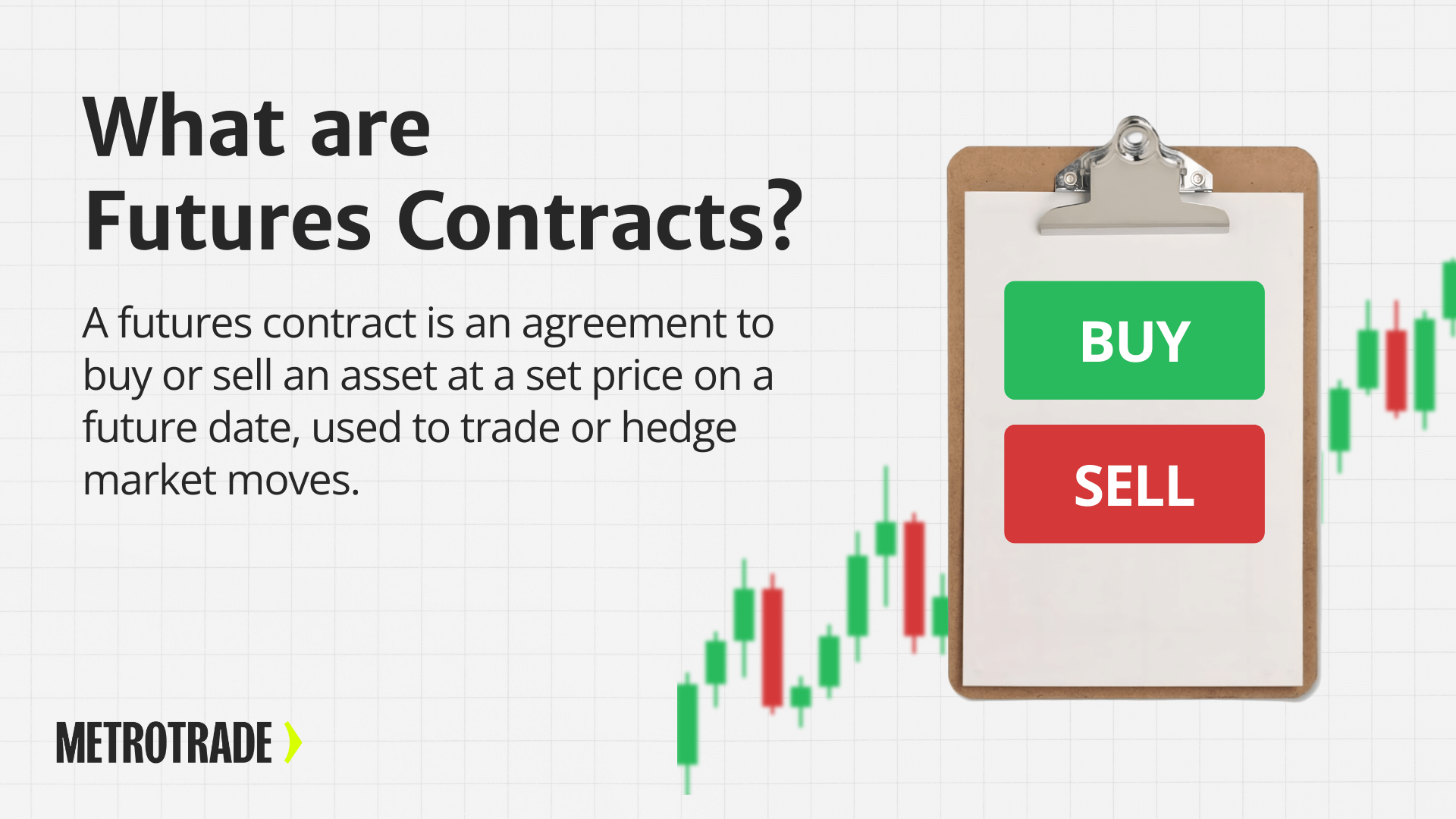
A futures contract is a standardized agreement to buy or sell an asset at a specific price on a set future date. These contracts trade on regulated exchanges like the CME Group and are used by both retail and institutional traders.
Traders use futures to speculate on price direction, hedge other positions, or take advantage of short-term volatility. Futures contracts offer high liquidity, tight spreads, and deep exposure to global markets, making them a go-to tool for active and professional traders.
Key Features of Futures:
- Standardized Contracts: Each futures contract has fixed specs: size, tick value, expiration date, etc.
- Margin-Based: You only need to put up a portion of the total value (initial margin) to open a position.
- Obligation to Buy/Sell: You are legally required to buy or sell the asset at expiration unless you close the position early.
- Mark to Market: Gains and losses are realized daily based on the contract’s closing price.
- Settlement: Most traders close the contract before expiration, but physical or cash settlement may apply depending on the product.
Examples of Futures:
- Micro E-mini S&P 500 (MES): A smaller version of the popular E-mini S&P 500 futures contract. It tracks the S&P 500 stock index and is often used by traders looking to speculate on the overall U.S. stock market with lower capital requirements.
- Crude Oil (CL): One of the most heavily traded commodity futures. This contract represents 1,000 barrels of crude oil and is commonly used by energy traders, hedgers, and investors trying to capture moves in global oil prices.
- Gold (GC): Tracks the price of physical gold and is widely used as a hedge against inflation, currency risk, or market uncertainty. Each standard gold futures contract represents 100 troy ounces.
- Bitcoin Futures (BTC or MBT): Offers exposure to the price of Bitcoin without directly owning the cryptocurrency. CME Group offers both standard and Micro Bitcoin contracts, which let traders speculate on crypto price moves with traditional brokerage accounts.
Start Trading Futures Today
Complete your live trading application and start trading futures with as little as $100.
What Are Options Contracts?
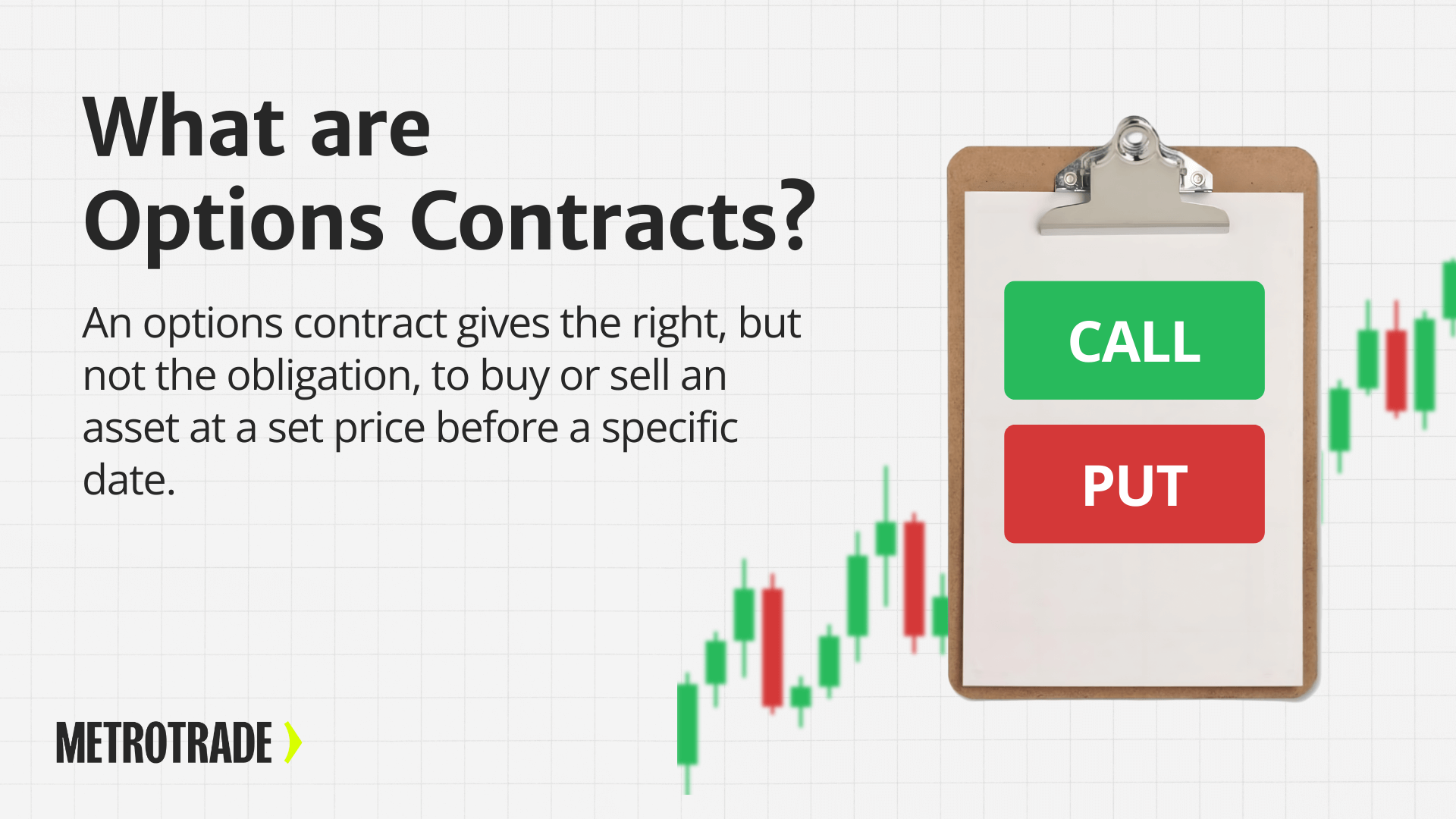
An options contract gives the holder the right, but not the obligation, to buy or sell an asset at a specific price before or at a set expiration date. Unlike futures, options are optional. You can get out of the trade prior to exercise, or maintain the position through exercise if feasible.
Options are often used for hedging, speculating, or generating income. For example, a trader might buy a put option to protect against downside risk or sell a call option to earn premium income. With dozens of potential strategies, options can be customized to fit a wide range of market views.
There are two types of options:
- Call Option: The right to buy at the strike price
- Put Option: The right to sell at the strike price
Key Features of Options:
- Premium: You pay a premium upfront to buy an option. This is the maximum loss for the option buyer.
- Strike Price: The price at which you can buy/sell the underlying asset.
- Time Decay: The value of options decreases as the expiration date gets closer (theta decay).
- Greeks and ratios: Option pricing involves variables like delta, theta, gamma, and implied volatility.
Core Differences Between Futures and Options
Let’s break down how these two instruments differ in structure, risk, pricing, and strategy.
1. Obligation vs Choice
- Futures: You are obligated to fulfill the contract (make or take delivery, or cash settle) unless you close your position before expiration.
- Options: For purchasers, you have the right, but not the obligation, to execute the contract. You can let it expire worthless.
2. Pricing Structure
- Futures: No upfront premium. You only need to post margin to open a position. The contract’s value changes with the market.
- Options: For purchasers, you pay a premium upfront. That cost is based on time, volatility, and how far the strike price is from the market price.
3. Risk Exposure
- Futures: You can lose more than your initial margin. Both upside and downside are unlimited.
- Options: Buyers can only lose the premium. Sellers (writers) take on more risk and can face large, and even unlimited, losses.
4. Leverage
- Futures: Built-in leverage using margin. Small price moves can mean large gains or losses.
- Options: You can control large positions with a small premium, but your returns depend on price movement and time decay.
5. Liquidity and Volume
- Futures: High liquidity in major contracts. Tight bid-ask spreads and quick execution.
- Options: Liquidity varies by strike price and expiration. Some contracts have wider spreads.
6. Expiration and Time Decay
- Futures: Value tracks the underlying asset more closely as expiration nears.
- Options: Time decay works against the buyer. The longer you wait, the more the option loses value unless the price moves in your favor.
7. Use Cases and Trading Style
- Futures: Ideal for short-term traders, day traders, and momentum strategies.
- Options: Better for strategic trades, hedging, or income generation through premium selling.
Pros and Cons of Trading Futures
Pros:
- Simple Pricing: Futures pricing is straightforward. The value of the contract rises and falls directly with the underlying asset, without complex variables like time decay or volatility.
- High Liquidity: Major futures markets like the S&P 500, crude oil, and gold have deep order books and high trading volume, making it easy to enter or exit trades quickly.
- Low Costs: Futures don’t require a premium to open a position. Traders typically only pay exchange fees, broker commissions, and margin, which can be more cost-efficient for active strategies.
- Tight Spreads: Bid-ask spreads in liquid futures contracts are often just one tick wide, which helps reduce slippage and improves trade execution—especially for scalpers and day traders.
- Built-In Leverage: Since you only need to post margin, not the full contract value, you can control a large position with less capital. This can increase potential returns on smaller accounts.
- Access to Global Markets: Futures provide traders exposure to a wide variety of asset classes, including commodities, stock indexes, interest rates, currencies, and crypto—all from one platform.
Cons:
- Higher Risk: Because of leverage and the obligation to fulfill the contract, losses can exceed your initial margin. A small move in the wrong direction can wipe out your account quickly.
- No Strategic Flexibility: Unlike options, which can be combined into complex multi-leg strategies, futures are typically used for directional trades only—long or short.
- Margin Calls: If your account balance drops below the required maintenance margin, you’ll receive a margin call and must deposit more funds or risk having your position closed automatically.
- Limited Risk Control: Without using stop-loss orders or advanced risk management, you don’t have built-in protection on futures trades the way option buyers do with their premium-defined max loss.
- Potential for Overtrading: Low barriers to entry and fast-moving markets can encourage traders to take excessive positions or trade too frequently, which increases risk and fees over time.
Pros and Cons of Trading Options
Pros:
- Defined Risk for Buyers: When you buy an option, your maximum loss is limited to the premium you paid. This built-in risk cap makes options appealing to traders who want more control over their downside.
- Multiple Strategies: Options can be used in simple one-leg trades or in complex combinations like spreads, straddles, strangles, and iron condors. This flexibility lets traders express specific views on direction, volatility, or time.
- Profit in All Directions: With the right strategy, you can profit whether the market goes up, down, or sideways. For example, long calls benefit from price increases, puts from declines, and neutral strategies from prices staying flat.
- Income Potential: Traders can sell options to collect premiums and generate recurring income. Strategies like covered calls and cash-secured puts are popular with investors looking to earn yield on their capital.
- Tailored Exposure: You can choose your exact strike price, expiration date, and trade size, which allows you to build highly customized trades based on your market view and risk tolerance.
Cons:
- Complex Pricing: Options are priced using multiple variables, including the underlying price, time to expiration, interest rates, and implied volatility. Understanding the Greeks and other ratios is often necessary to manage trades effectively.
- Time Decay: All options lose value over time unless the underlying price moves strongly in your favor. This decay accelerates as expiration approaches and works against buyers holding long positions.
- Liquidity Varies: Unlike futures, not all options are actively traded. Some strike prices and expiration dates have wide bid-ask spreads, which can make it harder to enter or exit at a fair price.
- Assignment Risk: If you sell an option, you may be assigned the underlying asset at any time before expiration. This can introduce unexpected risk or require more capital than expected.
- Steep Learning Curve: Between the calls and puts, the Greeks, volatility, and strategy selection, options trading can be intimidating for beginners. Many traders find it harder to grasp than futures.
Which Is Better for Different Trader Types?
There is no one-size-fits-all answer. It depends on your trading goals, risk tolerance, and skill level.
Active Traders and Scalpers
Futures are often the go-to. They offer high liquidity, quick fills, and no complicated variables. Traders can use technical analysis and execute trades in milliseconds.
Learn more about day trading futures and futures scalping
Swing Traders
Swing traders often use both futures and options, depending on the market and their strategy. Futures allow for strong directional exposure over several days or weeks, especially in markets like equity indexes or commodities. However, options provide more flexibility when volatility is high or when traders want to define risk using strategies like debit spreads or long puts.
Beginners
Futures can be easier to understand, but the risk is higher. Options offer defined risk but are harder to trade well. Beginners may benefit from starting with a demo account before risking real capital.
Hedgers
Both tools can be useful. A wheat farmer may use futures to lock in a price for their crop. A stock investor might buy a put option to protect their portfolio. The choice depends on how much flexibility you want.
How Much Do You Need to Trade Futures vs Options?
When comparing futures and options, it’s not just about strategy or risk—capital requirements matter just as much. Both markets let you control large positions with a relatively small amount of cash, but they do it in very different ways. Understanding how much money you’ll need to trade effectively can help you choose the right path.
Capital Needed to Trade Futures
Futures trading is based on margin, not the full value of the contract. To open a position, you only need to put up a percentage of the contract’s notional value. This margin is set by the exchange and can be adjusted based on market volatility. Many brokers like MetroTrade offer low intraday margin rates for actively managed positions, which can make futures very capital-efficient.
For example, a Micro E-mini S&P 500 (MES) contract might represent around $30,000 in market exposure, but you might only need $100–$300 in initial margin to trade it intraday. Overnight margin is typically higher but still far below the full contract value.
This built-in leverage allows traders to open meaningful positions with smaller accounts—but it also magnifies both gains and losses. Because losses can exceed your margin, it’s important to size trades responsibly and use stop-loss orders or risk management tools.
Recommended Futures Account Size:
While some traders start with as little as $500-$1,000, a more realistic minimum for actively trading micros is $2,000 to $5,000. This gives you enough room to manage multiple positions, handle volatility, and avoid immediate margin calls. For standard contracts like E-minis, most traders need at least $5,000-$10,000 to trade responsibly.
See related article: How Much Do You Need to Trade Futures?
Capital Needed to Trade Options
When you buy an option, you pay a premium upfront. That’s your total cost and your maximum possible loss. There’s no margin required for long calls or puts. For example, buying an option priced at $2.50 means you’ll pay $250 total (since each contract controls 100 shares or units).
This makes options attractive for traders who want to define their risk from the start. However, option sellers—especially those writing uncovered or “naked” options—may be required to post significant margin depending on the trade and the broker’s risk model.
Recommended Options Account Size:
You can technically start trading options with a few hundred dollars if you’re buying long calls or puts. But for more advanced strategies, or to sell options, you’ll need more capital. Most brokers recommend a minimum of $2,000 to $5,000 to start using options effectively, and significantly more if you plan to write uncovered positions.
Futures Are More Capital-Efficient
If you’re looking to maximize your exposure with a smaller account, futures can offer better capital efficiency. Margin-based trading gives you more buying power for every dollar in your account. This is one reason why many active traders, especially in stock index and commodity markets, choose futures over options.
However, capital efficiency works both ways. With greater leverage comes greater risk. A highly leveraged futures trade can lead to large losses very quickly, so having proper risk controls in place is essential.
MetroTrader: Trade Futures With a Pro-Level Platform
At MetroTrade, we make it simple to trade futures contracts with confidence. Our platform, MetroTrader, is designed for retail traders who want speed, control, and great pricing.
- Access global futures contracts
- Use 75+ indicators, drawing tools, and multiple chart types
- Low intraday margins and clear commission rates
- Trade from desktop or mobile
Want to test it out first? Start with a free MetroTrader demo account. No funding required.
Conclusion
Futures and options are powerful tools that offer different paths to trading success. Understanding the core differences can help you decide which one fits your goals and style.
Futures are fast, liquid, and great for active traders—but they carry higher risk. Options provide more strategy choices and defined risk, but require deeper knowledge to trade well.
The best traders don’t just pick one. They learn both, test their strategies, and stay disciplined.
Start by practicing with a demo account. Learn the mechanics, test your ideas, and take the first step toward confident trading.
Frequently Asked Questions
What is the main difference between futures and options contracts?
The main difference is that futures contracts create a legal obligation to buy or sell an asset at a set price on a specific future date, while options contracts give the buyer the right, but not the obligation, to make the same trade. This makes futures more direct but riskier, while options offer more flexibility and controlled risk for buyers.
Are futures riskier than options?
Yes, futures are generally riskier than options. Futures contracts involve leverage and carry unlimited loss potential if the market moves against your position. In contrast, options buyers can only lose the premium they paid for the contract. Options sellers do face higher risk, but buyers have clearly defined limits. For traders new to leverage, futures can expose you to faster and larger losses.
Can you lose more than your initial investment in futures or options?
You can lose more than your initial investment when trading futures due to the use of margin and the obligation to fulfill the contract. With options, buyers cannot lose more than the premium they paid. However, option sellers (writers) can lose significantly more if the market moves sharply against the position. Using stop-loss orders and risk management is critical with both.
Why do traders prefer futures over options?
Many traders prefer futures because they offer high liquidity, simple pricing, and tight spreads. Futures are easier to understand for directional trading, and they don’t involve time decay or complex pricing models like options. Futures are often used by day traders and scalpers who value speed, clarity, and direct exposure to price movements in commodities, indexes, and crypto.
Is options trading better for beginners?
Options can be better for beginners in terms of defined risk, but they are harder to learn. Buying options limits your potential loss to the premium paid, which appeals to risk-averse traders. However, the pricing model is more complex and includes variables like volatility and time decay. Beginners often start with simple long call or put options before exploring advanced strategies.
How does margin work in futures compared to options?
Margin in futures allows you to control a large position with a smaller upfront deposit. This creates leverage but also increases risk. In options, buyers don’t use margin – only sellers may be required to post margin depending on the trade. Futures margin is set by the exchange and changes with volatility, while options margin varies by broker and strategy.
The content provided is for informational and educational purposes only and should not be considered trading, investment, tax, or legal advice. Futures trading involves substantial risk and is not suitable for every investor. Past performance is not indicative of future results. You should carefully consider whether trading is appropriate for your financial situation. Always consult with a licensed financial professional before making any trading decisions. MetroTrade is not liable for any losses or damages arising from the use of this content.