


If you’ve ever looked at a futures price chart and thought, “Why is the futures price higher (or lower) than the spot price?” you’re already brushing up against two key concepts in futures trading: contango and backwardation.
These terms describe the shape of the futures curve and help explain how markets price future expectations. They impact your trading costs, roll yield, and even your overall strategy.
In this guide, we’ll explain what contango and backwardation mean, how they work, why they matter, and how to spot them in the markets you trade. Whether you’re trading crude oil, gold, indexes, or grains, understanding market structure gives you an edge.
Key Takeaways
- Contango means future prices are higher than spot prices due to storage, financing, and other carrying costs. It creates a rising futures curve and can lead to negative roll yield for long positions.
- Backwardation means future prices are lower than spot prices, often driven by short-term supply shortages or strong demand. It results in a downward-sloping curve and can benefit traders with positive roll yield.
- The shape of the futures curve impacts strategy, costs, and trade timing. Traders use curve structure to evaluate roll yield, set up calendar spreads, and manage risk across different asset classes.
- You can spot contango or backwardation by comparing spot prices to futures contracts or using a forward curve.
What Is Contango?
Contango is when futures prices are higher than the current spot price of the asset. This means the price of a contract for future delivery is greater than the price you’d pay for that asset today.
For example, if crude oil is trading at $75 per barrel today but a futures contract for delivery in six months is priced at $80, the market is in contango.
Why Contango Happens
Contango is usually a sign that the market expects prices to rise over time. But that’s not the whole story. A key reason contango happens is due to carrying costs, the expenses involved in holding the underlying asset until the delivery date.
These carrying costs include:
- Storage fees
- Insurance
- Interest on borrowed money
- Opportunity cost of tying up capital
For example, if you’re a company storing barrels of oil, you need to pay for a storage facility, protect the oil from damage, and finance the inventory. Futures prices will reflect those costs.
Contango in the Futures Curve
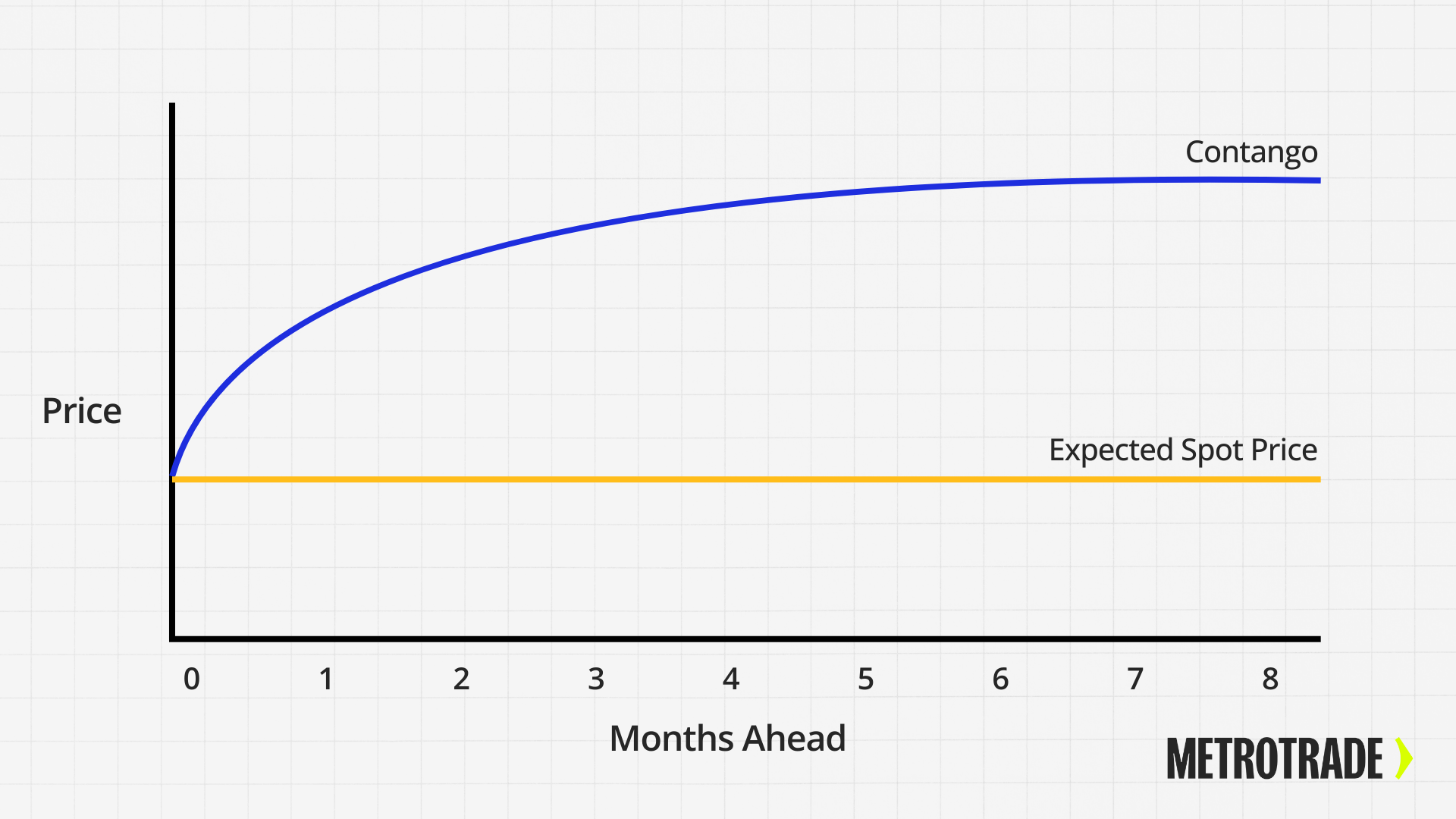
When a market is in contango, the futures curve slopes upward. That means each contract further out in time is priced higher than the ones that come before it.
This upward slope signals that longer-dated contracts are more expensive due to time and carry costs.
Real-World Example of Contango
The crude oil market is one of the best examples. In times of oversupply, oil futures often enter contango. For example, during the COVID-19 lockdowns in 2020, oil demand collapsed while supply stayed high. Storage filled up, and traders priced in heavy carry costs. As a result, contracts for delivery months ahead traded well above the spot price.
What Is Backwardation?
Backwardation is the opposite of contango. It’s when futures prices are lower than the current spot price. This means the market expects prices to drop in the future, or there’s an urgent need for the asset now.
For example, if gold is trading at $4,000 per ounce today but a futures contract for delivery in three months is $3,970, the market is in backwardation.
Why Backwardation Happens
Backwardation often signals tight supply or strong short-term demand. It can also reflect a concept called convenience yield — the benefit of having access to the physical asset right away.
Reasons for backwardation include:
- Supply disruptions
- Seasonal shortages
- Unexpected demand surges
- Urgency from producers or consumers
For instance, farmers or meatpackers may need physical delivery of grain or livestock now, not months from now. That urgency causes the near-term price to rise above future prices.
Backwardation in the Futures Curve

A market in backwardation has a downward-sloping futures curve. Near-month contracts are more expensive, and each later contract gets cheaper.
This curve shape suggests that current demand is strong or supply is limited, but the market expects things to normalize later.
Real-World Example of Backwardation
Agricultural commodities like wheat, corn, and lean hogs often move into backwardation during specific seasons. If a drought reduces grain supply in the short term, spot prices spike. However, future harvests may be more stable, keeping long-term prices lower.
Backwardation can also be seen in gold and other metal futures when short-term inventory is low but long-term supplies are not a concern.
Key Differences Between Contango and Backwardation
Price Curve Shape
- Contango: Upward-sloping curve (future prices > spot)
- Backwardation: Downward-sloping curve (spot > future prices)
The curve shows how traders expect prices to behave over time.
Market Expectations
- Contango usually reflects expectations of rising prices or high carrying costs.
- Backwardation signals immediate demand or supply shortages.
These expectations influence how traders position themselves in the market.
Trading and Hedging Impacts
Contango makes it more expensive to roll long positions forward. That’s why many commodity ETFs may underperform in contango-heavy markets. The “roll cost” may eat into returns.
In backwardation, rolling a contract forward may result in a positive roll yield, which can boost returns.
Hedgers also need to understand curve shapes. A company hedging fuel costs might face higher hedge costs in contango than in backwardation.
Storage and Carrying Costs
- In contango, storage and finance costs push prices higher for later contracts.
- In backwardation, the urgency of current supply outweighs future costs.
Knowing when carrying costs drive pricing may help you choose better entry points.
How These Concepts Impact Futures Traders
Roll Yield Explained
Roll yield is the gain or loss from rolling an expiring futures contract into a later one.
- In contango, you sell the near-month and buy a more expensive far-month contract. This often results in a negative roll yield.
- In backwardation, the far-month contract is cheaper than the expiring one, creating a positive roll yield.
Roll yield matters for swing traders, ETF investors, and anyone holding futures for more than a few days.
Learn more about futures contract rollover
Risks and Opportunities
Understanding market structure helps you spot risks early:
- Contango can quietly eat away at returns over time.
- Backwardation may offer better long exposure but can flip quickly.
Traders who ignore curve shape might enter trades that look good on the chart but have hidden costs in the background.
Trading Strategy Examples
- Long-only trend trades tend to work better in backwardation.
- Calendar spread trades can profit from curve shifts (e.g. buying one contract and selling another further out).
- Arbitrage strategies in contango involve buying spot assets and shorting futures contracts (a basis trade).
Strategy choice should match the market structure.
Impact on Options on Futures
Contango and backwardation affect implied volatility, option pricing, and strike selection.
For example:
- In contango, higher long-dated futures prices may lead to elevated out-of-the-money call prices.
- In backwardation, short-term demand could boost front-month implied volatility.
Traders using options need to understand the forward curve to price spreads, straddles, and strangles effectively.
Start Trading Futures Today
Complete your live trading application and start trading futures with as little as $100.
Contango vs Backwardation in Different Asset Classes
Commodities
- Oil and natural gas may frequently trade in contango due to high storage costs.
- Grains and meats can tend toward backwardation in seasonal shortages.
- Metals like copper or gold can swing between the two based on inventory and global demand.
Currency and Treasury Futures
Currency futures and treasury futures markets reflect interest rate differentials more than storage costs. Contango and backwardation are usually narrow and tied to macroeconomic expectations.
For example, a Treasury futures curve might shift based on Fed rate hike projections or inflation fears.
How To Identify Contango or Backwardation
Using the Futures Curve
Some platforms display a forward curve, showing price by delivery month.
Look for:
- Upward slope = Contango
- Downward slope = Backwardation
You can also build the curve manually by comparing contract prices across months.
Spot vs Futures Price
A quick check:
- If the futures price > spot price, you’re in contango.
- If the spot price > futures price, it’s backwardation.
Comparing the front-month contract to the spot price (or cash market) is a fast way to gauge curve shape.
Conclusion
Understanding contango and backwardation is essential for serious futures traders. These curve structures shape how prices evolve, how roll costs impact your trades, and which contracts may offer better opportunities.
Whether you’re trading energy, metals, indexes, or grains, knowing the market structure gives you more control over risk and reward.
Ready to track real-time futures prices and trade price swings as they happen? Try it with MetroTrader, our multi-device platform built for futures traders.
Frequently Asked Questions
What is the difference between contango and backwardation?
Contango is when futures prices are higher than the spot price, while backwardation is when futures prices are lower than the spot price. Contango often reflects storage and financing costs, while backwardation suggests short-term supply shortages or strong demand.
How can you tell if a futures market is in contango or backwardation?
You can tell if a market is in contango or backwardation by comparing the spot price to futures prices. If futures prices are higher than the spot price, it’s contango. If futures prices are lower than the spot price, it’s backwardation. A futures curve chart also shows the shape clearly.
Is contango bad for traders?
Contango is not always bad, but it can hurt long-term returns due to negative roll yield. Traders holding long positions over time may pay more to roll contracts forward, which reduces profits. However, short-term traders may not be affected as much.
Why does oil often trade in contango?
Oil often trades in contango because of high storage costs, financing expenses, and large supply. When demand is low or inventories are full, futures prices rise to reflect the cost of carrying oil until delivery.
Can a market switch from contango to backwardation?
Yes, a market can switch from contango to backwardation based on changes in supply, demand, or economic conditions. For example, a sudden supply shock or surge in short-term demand can flip the curve from contango to backwardation.
What is roll yield in futures trading?
Roll yield is the gain or loss from replacing an expiring futures contract with a new one. It’s negative in contango (you pay more to roll) and positive in backwardation (you pay less to roll). Roll yield affects returns for traders and funds that hold futures over time.
The content provided is for informational and educational purposes only and should not be considered trading, investment, tax, or legal advice. Futures trading involves substantial risk and is not suitable for every investor. Past performance is not indicative of future results. You should carefully consider whether trading is appropriate for your financial situation. Always consult with a licensed financial professional before making any trading decisions. MetroTrade is not liable for any losses or damages arising from the use of this content.